English Text
With the acceleration of urbanization and the deep-rooted concept of green environmental protection, artificial turf has gradually replaced natural turf and become the preferred green coverage solution for sports venues, home courtyards, municipal greening, commercial spaces and other scenarios, thanks to its high simulation, convenient maintenance and strong durability. As a new type of environmentally friendly material made of synthetic fibers that imitates the shape and texture of natural turf, artificial turf not only solves the pain points of natural turf such as high maintenance costs, great climate restrictions and short service life, but also conforms to the current era demand of sustainable development with its energy-saving, water-saving and low-carbon environmental protection characteristics.
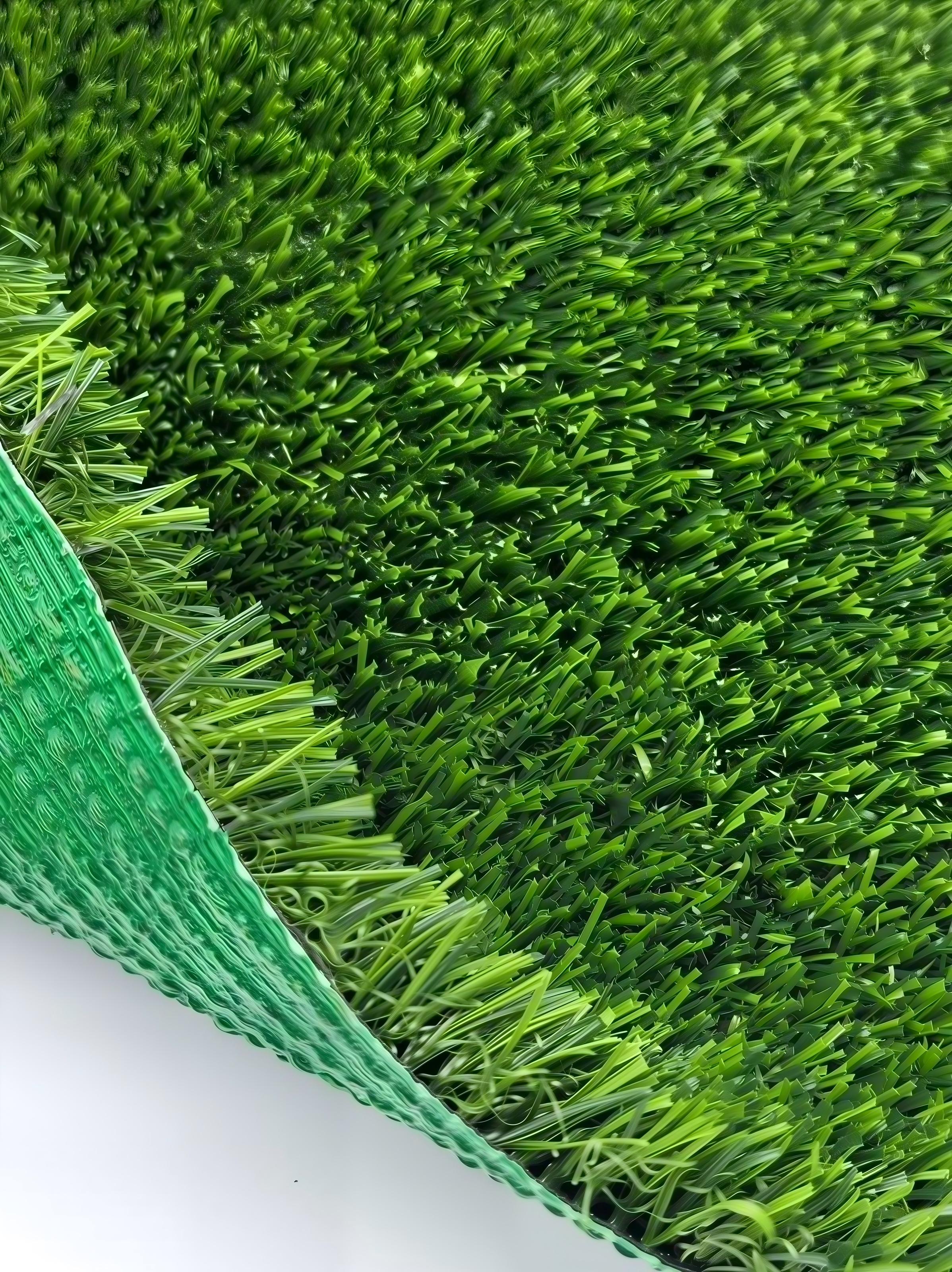
The core advantage of artificial turf lies in its dual attributes of beauty and practicality. In terms of appearance, artificial turf upgraded by modern technology has been infinitely close to natural turf in color, density and texture. It can even be customized in grass height, color and style according to scene needs. Whether creating a flat and open sports venue or decorating a delicate and small courtyard landscape, it can present a evergreen and fresh texture, without worrying about withering and yellowing caused by seasonal changes.
In terms of practicality, artificial turf has strong weather resistance and durability. It can resist various harsh weather such as high temperature, severe cold and heavy rain, is not easy to fade and wear, and can maintain a good state for a long time. It is especially suitable for high-frequency use scenarios – such as football fields, basketball courts and other sports venues. It can withstand high-intensity treading without damage and can be used all year round, completely solving the problem that natural turf “is easy to wear and needs rest”.
Energy saving and water saving is another prominent highlight of artificial turf. The maintenance of natural turf requires a lot of water resources. Every year, links such as irrigation, pruning, fertilization and insect control not only consume manpower and material resources, but also may pollute the environment due to the use of chemical fertilizers and insecticides. In contrast, artificial turf does not need irrigation, pruning or fertilization. It only needs regular simple cleaning to maintain cleanliness and beauty. Each square meter can save dozens of tons of water resources every year. Long-term use can greatly reduce maintenance costs, and at the same time reduce the pollution of chemical substances to soil and water sources, truly realizing “green environmental protection, worry and labor saving”. According to relevant data, based on an area of 1200 square feet and a service life of 12 years, the unit area cost of artificial turf is 65% lower than that of natural turf, showing significant cost performance advantage.
With the continuous upgrading of technology, the application scenarios of artificial turf are also expanding. In the sports field, artificial turf has been widely used in various sports venues such as football fields, rugby fields, hockey fields and tennis courts. It can not only provide good buffer performance for athletes, reduce sports injuries, but also meet the use standards of professional events, and has obtained certification from authoritative institutions such as the International Federation of Association Football (FIFA).
In the field of leisure landscape, artificial turf has entered home courtyards, roof gardens, balconies, commercial squares, municipal parks and other spaces, creating a comfortable and natural green rest environment for people. It is especially suitable for areas with insufficient light and poor soil conditions where natural turf cannot be planted. In addition, artificial turf is also used in kindergartens, school playgrounds, pet activity areas and other scenarios. With its non-toxic, soft and comfortable characteristics, it provides a safe activity space for the elderly, children and pets.
From the perspective of market development trends, the artificial turf industry is in a stage of steady growth. Data show that the global demand for artificial turf increased from 171 million square meters to 348 million square meters from 2015 to 2021, with a compound annual growth rate (CAGR) of 12.59%; the sales volume increased from 11.8 billion yuan to 21.2 billion yuan, with a CAGR of 10.33%. It is estimated that the global demand for artificial turf will reach 480 million square meters and the sales volume will reach 29.3 billion yuan in 2025. Among them, the demand for leisure turf is growing rapidly. It has surpassed sports turf in 2021, accounting for 53.30%. It is expected that the proportion will rise to 57.71% in 2025, becoming the core growth driver of the artificial turf market. As the world’s main producer and seller of artificial turf, China’s production capacity accounts for more than 60% of the world’s total, and its export volume accounts for 47.04% of the world’s total exports. With advantages in cost, production capacity and technology, China occupies an important position in the global market.
Choosing high-quality artificial turf can not only improve the aesthetics and practicality of the space, but also realize the dual value of environmental protection and energy saving. We focus on the R & D, production and sales of artificial turf, providing high-quality products that meet international standards, including various types such as sports turf and leisure turf. We can provide customized paving solutions according to the needs of different scenarios, and provide full escort from product quality to construction services, so that every space can have evergreen green vitality, and make the green life of environmental protection, convenience and efficiency within reach.
中文正文
在城市化进程加速与绿色环保理念深入人心的今天,人造草坪凭借其仿真度高、维护便捷、耐用性强等优势,逐渐取代天然草坪,成为体育场馆、居家庭院、市政绿化、商业空间等场景的优选绿色覆盖方案。作为一种以合成纤维为原料,模仿天然草坪形态与质地的新型环保材料,人造草坪不仅解决了天然草坪养护成本高、受气候限制大、使用寿命短等痛点,更以节能节水、低碳环保的特性,契合当下可持续发展的时代需求。
人造草坪的核心优势,在于其兼顾美观与实用的双重属性。从外观上看,经过现代工艺升级的人造草坪,在颜色、密度、纹理上已无限接近天然草坪,甚至可根据场景需求定制草高、颜色与款式,无论是打造平整开阔的运动场地,还是点缀精致小巧的庭院景观,都能呈现出四季常绿的鲜活质感,无需担心季节更替导致的枯黄、枯萎问题。从实用性来看,人造草坪具备极强的耐候性与耐用性,可抵御高温、严寒、暴雨等多种恶劣天气,不易褪色、不易磨损,能长期保持良好状态,尤其适合高频使用的场景——比如足球场、篮球场等运动场地,可承受高强度踩踏而不损坏,全年全天候可使用,彻底解决了天然草坪“易损耗、需休养”的难题。
节能节水是人造草坪的另一大突出亮点。天然草坪的养护需要消耗大量水资源,每年灌溉、修剪、施肥、除虫等环节不仅耗费人力物力,还可能因使用化学肥料、杀虫剂对环境造成污染。而人造草坪无需灌溉、修剪、施肥,仅需定期简单清扫,就能保持整洁美观,每平方米每年可节省数十吨水资源,长期使用能大幅降低养护成本,同时减少化学物质对土壤和水源的污染,真正实现“绿色环保、省心省力”。根据相关数据显示,以1200平方英尺的面积及12年使用寿命计算,人造草坪单位面积成本相较天然草坪可节省65%,性价比优势显著。
随着技术的不断升级,人造草坪的应用场景也在持续拓展。在体育领域,人造草坪已广泛应用于足球场、橄榄球场、曲棍球场、网球场等各类运动场地,不仅能为运动员提供良好的缓冲性能,减少运动损伤,还能满足专业赛事的使用标准,获得了国际足联(FIFA)等权威机构的认证。在休闲景观领域,人造草坪走进了家庭庭院、屋顶花园、阳台、商业广场、市政公园等空间,为人们打造出舒适、自然的绿色休憩环境,尤其适合光照不足、土壤条件较差,无法种植天然草坪的区域。此外,人造草坪还被应用于幼儿园、学校操场、宠物活动区等场景,凭借其安全无毒、柔软舒适的特性,为老人、儿童、宠物提供安全的活动空间。
从市场发展趋势来看,人造草坪行业正处于稳步增长阶段。数据显示,2015-2021年全球人造草坪需求量由171百万平方米增长至348百万平方米,复合年增长率达12.59%;销售额由118亿元增长至212亿元,复合年增长率为10.33%,预计2025年全球需求量将达480百万平方米,销售额达293亿元。其中,休闲草市场需求增长迅猛,2021年已超越运动草,占比达53.30%,预计2025年占比将提升至57.71%,成为人造草坪市场的核心增长动力。中国作为全球人造草坪的主要生产和销售国,产能约占全球60%以上,出口量占全球出口总量的47.04%,凭借成本、产能、技术等优势,在全球市场中占据重要地位。
选择优质的人造草坪,不仅能提升空间的美观度与实用性,更能实现环保与节能的双重价值。我们专注于人造草坪的研发、生产与销售,提供符合国际标准的高品质产品,涵盖运动草、休闲草等多种类型,可根据不同场景的需求,提供定制化的铺装解决方案,从产品品质到施工服务,全程保驾护航,让每一处空间都能拥有四季常绿的绿色生机,让环保、便捷、高效的绿色生活触手可及。
发表回复