Artificial grass has become the top choice for homeowners, sports facility operators, and commercial property owners worldwide, thanks to its zero-maintenance, all-weather durability, and realistic appearance. In 2026, the artificial turf industry has made continuous upgrades in material technology, environmental protection standards, and scenario-specific design. This complete buying guide breaks down core parameters, scenario-based selection, and common purchasing mistakes to help you make a cost-effective and long-lasting investment for your artificial grass project.
When purchasing artificial grass, price is not the only standard. Fiber material, pile height, stitch density, and backing technology are the four key indicators that directly determine the service life, comfort, and safety of artificial turf. Understanding these parameters clearly can help you stay away from low-quality products and select the most suitable artificial grass for your actual needs.
Fiber material is the foundation of artificial grass quality. PE material features soft touch, high simulation, UV resistance, and no odor, making it ideal for residential courtyards, balconies, pet areas, kindergartens, and landscape greening. It is important to avoid products made from recycled materials, as high-quality PE fiber burns without black smoke or pungent smell. PP material boasts high wear resistance and relatively low cost, suitable for sports fields and high-traffic commercial areas, but its texture is harder and not recommended for scenarios with direct contact by children. PE+PP blended material combines softness and wear resistance, perfect for multi-purpose sports fields and community leisure areas. Nylon material has excellent elasticity and heat resistance, mostly used in professional sports fields, but it comes at a higher price and is not necessary for ordinary daily scenarios.
Pile height directly affects the touch and application scenarios of artificial grass, and higher is not always better. Short pile grass at 10-20mm is lightweight and easy to clean, suitable for exhibition enclosures, roof greening, and pet areas. Medium pile grass at 20-35mm offers soft touch and balanced aesthetics and durability, fitting for home courtyards, kindergartens, and commercial landscapes. Long pile grass at 35-50mm provides good cushioning for community leisure areas and light sports use. Extra-long pile grass at 50-60mm is mainly used for professional football fields and training bases, requiring quartz sand and rubber particles to ensure sports performance.
Stitch density represents the number of tufts per square meter, which is crucial for anti-fading and wear resistance. Basic density under 18,000 tufts per square meter is cost-effective for low-traffic areas such as small home yards and temporary enclosures. Standard density between 18,000 and 25,000 tufts per square meter delivers balanced flatness and durability for medium and high-traffic places including pet areas and kindergartens. High density above 25,000 tufts per square meter features strong wear resistance with a service life of up to 8-10 years, suitable for professional sports fields and busy commercial plazas.
Backing and base cloth also affect the service life greatly. PU backing is eco-friendly, waterproof, and aging-resistant, highly recommended for home and children-related scenarios. SBR latex backing is a cost-effective choice, but poor-quality latex that easily cracks and peels off should be avoided. Double-layer composite grid cloth is suitable for sports fields due to high tensile strength, while PP plus non-woven fabric is more flexible for home and landscape use. Permeable base cloth is a must for roof greening to prevent water accumulation.
For residential scenarios including yards, balconies and pet areas, priority should be given to eco-friendly, easy-cleaning and safe products. Recommended configurations include PE fiber, 25-30mm pile height, medium density and PU backing. Pet-specific artificial grass should be scratch-resistant with drainage holes to reduce residue, and balcony grass needs to be lightweight to avoid overloading.
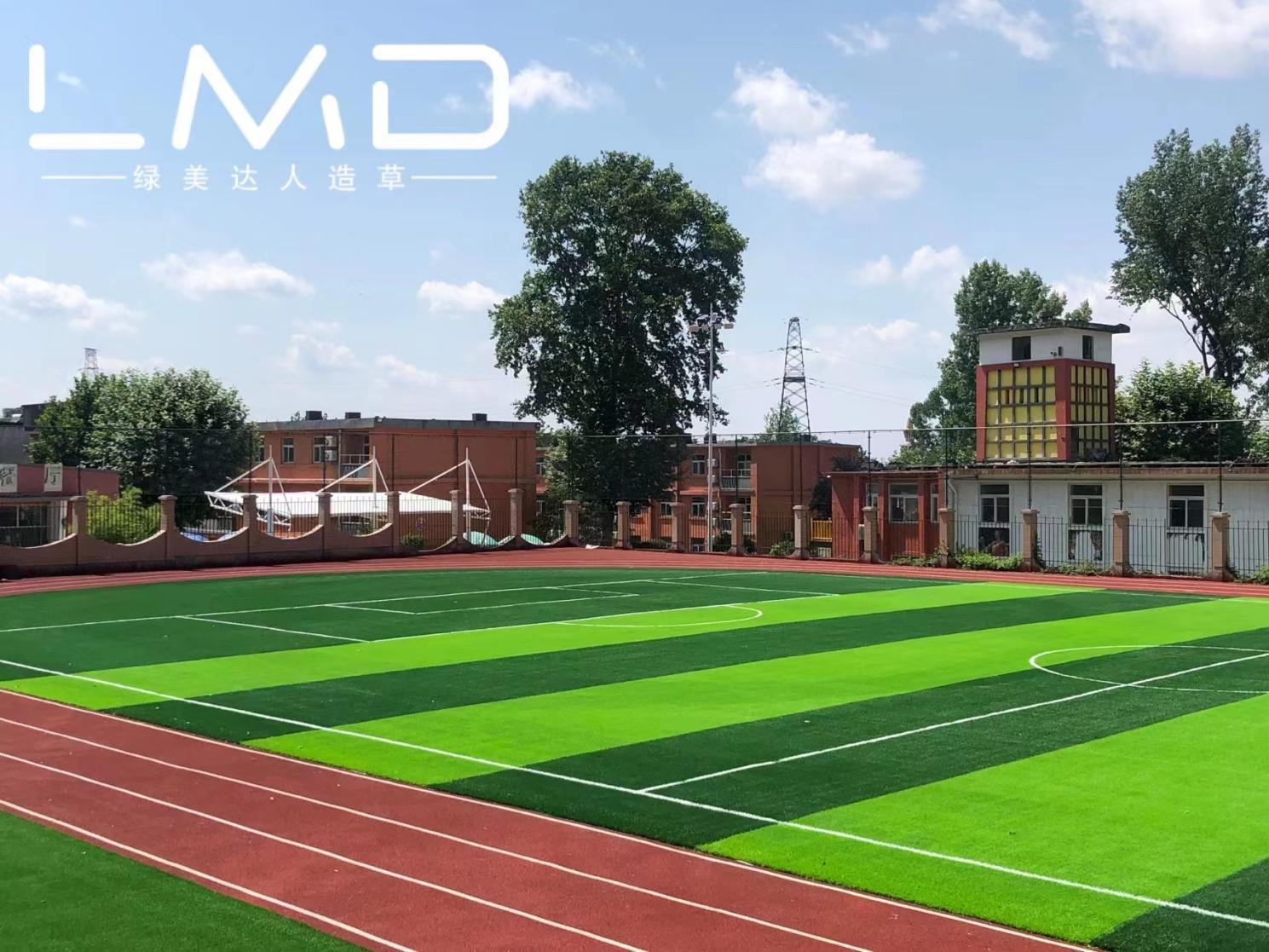
For sports scenarios such as football fields and kindergarten playgrounds, the focus is on shock absorption and wear resistance. Professional football fields require blended fiber, 50-60mm pile height, high density and infill materials to meet international safety standards. Kindergartens should choose soft mixed fiber grass without filling particles to ensure children’s safety.
For commercial scenarios including parks, shopping malls and exhibition areas, the key points are anti-aging, high simulation and high traffic resistance. UV-resistant PE or blended grass with 25-35mm pile height and medium to high density is suitable, and customized color matching can enhance visual effects. For roof greening, lightweight and non-filling short grass is preferred to reduce load while ensuring drainage and temperature resistance.
Many buyers fall into low-price traps when buying artificial grass. Products priced too low often use recycled materials with excessive harmful substances, and false claims of lifetime warranty are not credible. Formal products usually have a warranty period of 3 to 8 years, with clear terms for fading, breakage and degumming. It is necessary to ask for environmental protection test reports to ensure compliance with safety standards, especially for family and children scenarios.
Another common mistake is overemphasizing pile height while ignoring density. Grass with high pile but low density looks good at first glance but quickly flattens and has poor durability. It is essential to confirm both parameters at the same time. In addition, mismatching grass types for scenarios, such as using hard sports grass for home courtyards, will lead to poor experience and potential safety risks. Different scenarios need targeted selection instead of one-size-fits-all products.
In 2026, the artificial grass industry is moving towards scenario-specific, high-quality and eco-friendly development. The core of purchasing is not choosing the cheapest one, but the most suitable one for your needs. By clarifying usage scenarios, mastering key parameters, checking product qualifications and avoiding common traps, you can make a reliable investment that brings long-term comfort and beauty to your space.
2026 年人造草坪选购指南:全场景参数解析与避坑攻略
人造草坪凭借免维护、全天候耐用、外观逼真等优势,已成为全球家庭、运动场地与商业项目的首选铺装材料。2026 年,人造草坪行业在材质工艺、环保标准与场景化设计方面持续升级,这份完整选购指南将拆解核心参数、场景化选型方案与常见采购误区,帮助您做出高性价比、长期耐用的选购决策。
选购人造草坪时,价格并非唯一标准。草丝材质、草高、簇密度和背胶工艺是四大核心指标,直接决定草坪的使用寿命、使用舒适度与安全性。清晰掌握这些参数,能帮您远离劣质产品,选出最贴合实际需求的人造草坪。
草丝材质是草坪品质的基础。PE 材质触感柔软、仿真度高、抗紫外线且无异味,适合家庭庭院、阳台、宠物区、幼儿园与景观绿化场景。选购时需避开回收料产品,优质 PE 草丝燃烧无黑烟、无刺鼻气味。PP 材质耐磨性强、成本较低,适用于运动场地与人流量大的商业区域,但质地偏硬,不建议用于儿童直接接触的场景。PE 与 PP 混合材质兼顾柔软度与耐磨性,适合多功能运动场与社区休闲区。尼龙材质弹性优异、耐高温,多用于专业运动场地,但价格较高,普通日常场景无需选用。
草高直接影响草坪触感与适用场景,并非越高越好。10-20mm 短草轻便易清洁,适合展厅围挡、屋顶绿化与宠物区域;20-35mm 中草触感柔软,美观与耐用性平衡,适用于家庭庭院、幼儿园与商业景观;35-50mm 长草缓冲性好,可用于社区休闲区与轻度运动场景;50-60mm 超长草主要用于专业足球场与训练基地,需填充石英砂与橡胶颗粒以保障运动性能。
簇密度指每平方米的草丝簇数,是判断草坪抗倒伏、耐踩踏能力的核心。每平方米低于 18000 簇的基础款性价比高,适合小庭院、临时围挡等低人流场景;18000 至 25000 簇的标准款平整度与耐用性均衡,适用于宠物区、幼儿园等人流中等场景;高于 25000 簇的高端款耐磨性强,使用寿命可达 8-10 年,适合专业运动场与商业广场。
背胶与底布直接影响草坪使用寿命。PU 背胶环保防水、耐老化,优先用于家庭与儿童场景;丁苯胶背胶性价比更高,但需避开易开裂脱胶的劣质乳胶。运动场地选用双层复合网格布,抗拉强度高不易变形;家庭与景观场景选用 PP 无纺布复合布,柔韧防潮;屋顶绿化需选用透水底布,避免积水。
家庭场景包括庭院、阳台与宠物区,核心需求为环保安全、易清洁、低维护。推荐选用 PE 草丝、25-30mm 草高、中等密度搭配环保 PU 背胶。宠物专用草坪需耐抓咬、带排水孔减少残留,阳台草坪需轻量化设计避免承重超标。
运动场景如足球场、幼儿园场地,重点关注抗冲击与耐磨性。专业足球场采用混合草丝、50-60mm 草高、高密度配置并填充颗粒,符合国际安全标准;幼儿园选用柔软直曲混合草丝,不使用填充颗粒,保障儿童安全。
商业场景包括公园、商场、展厅,侧重抗老化、高仿真与人流适配性。选用抗 UV 的 PE 或混合草丝,25-35mm 草高、中高密度款式,可定制色彩提升视觉效果。屋顶绿化选用轻量化免填充短草,减轻承重同时保障排水与耐高低温性能。
许多买家在选购时陷入低价陷阱,单价过低的产品多采用回收料,有害物质超标,所谓终身质保多为虚假宣传。正规草坪质保期为 3-8 年,对褪色、断丝、脱胶等问题有明确保障。选购时需索要环保检测报告,确保重金属等指标达标,家庭与儿童场景尤为重要。
另一个误区是过分看重草高而忽视密度,高草低密度产品看似美观,却易倒伏、耐用性差,需同时确认两项参数。此外,场景错配也会影响使用体验,例如将硬质运动草用于家庭庭院,触感差且存在安全隐患,不同场景需针对性选型,不可一概而论。
2026 年人造草坪行业正朝着场景化、品质化、环保化方向发展,选购核心不是选择最便宜的产品,而是最适配自身需求的款式。明确使用场景、掌握关键参数、核验产品资质、避开常见误区,才能实现一次采购、长期省心,让人造草坪为空间带来持久的舒适与美观。
发表回复