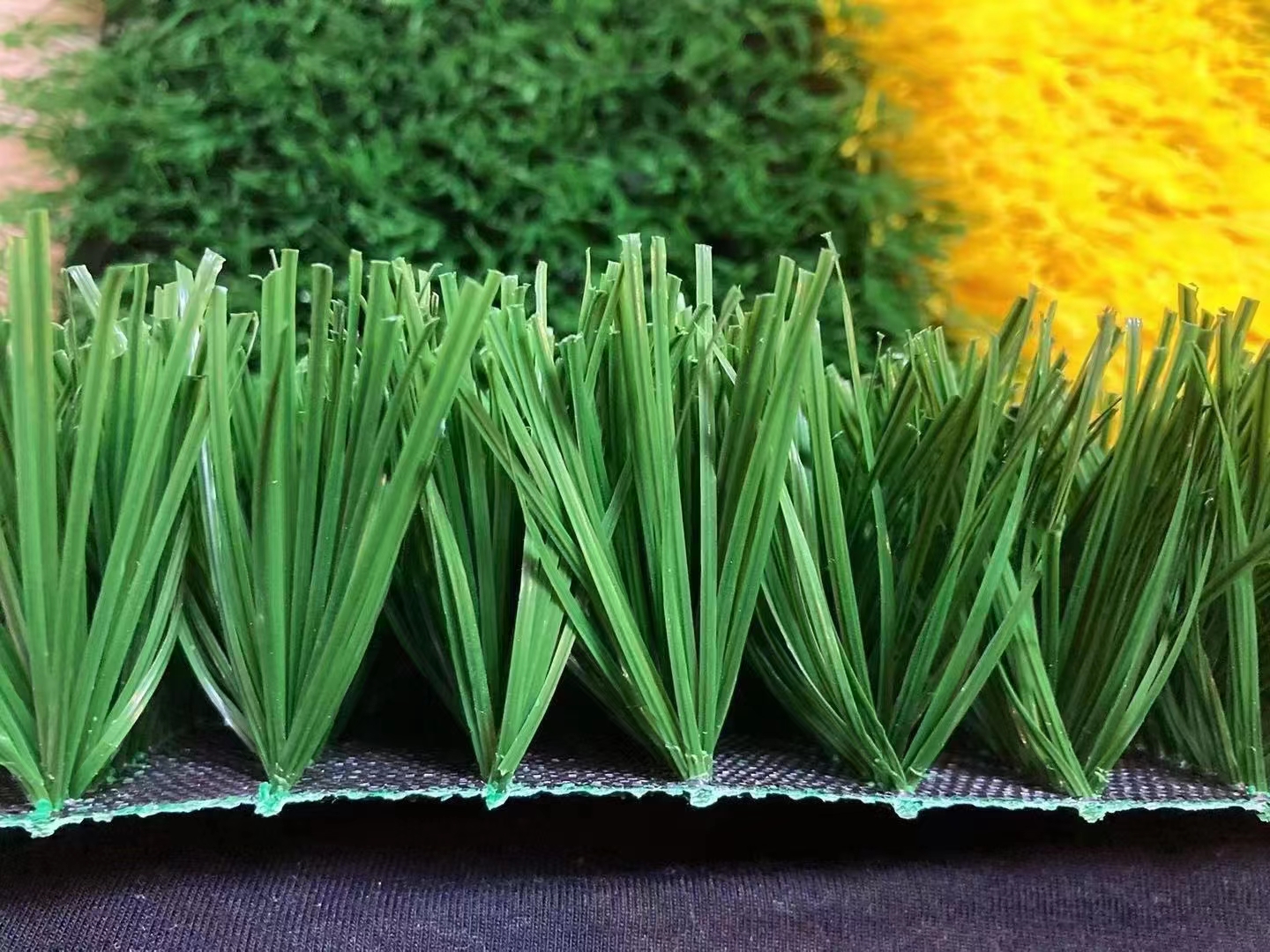
With the deep-rooted concept of green environmental protection and the increasing cost of maintenance, Artificial Grass has gradually moved from professional sports venues to home courtyards, municipal greening, commercial spaces and other scenarios with its core advantages of high simulation, convenient maintenance and strong durability, becoming the preferred alternative to natural grass. In 2026, with the approaching of the US-Canada-Mexico World Cup and the advancement of environmental policies, the artificial grass industry ushered in a new growth opportunity. Whether it is home decoration, campus renovation or commercial landscape creation, choosing a high-quality artificial grass can not only achieve the evergreen aesthetic effect, but also save long-term maintenance costs, balancing both practical and environmental values.
Many people easily fall into the misunderstanding when purchasing artificial grass, thinking that “the lower the price, the better”, but in fact, it is not. Inferior artificial grass not only has a short service life, is easy to fade and shed, but also may affect health due to non-environmentally friendly materials. Combined with the latest industry standards and market demand in 2026, this article will detailedly explain the purchasing skills, core advantages and full-scenario applications of artificial grass, help you avoid 90% of the pitfalls, and interpret the industry development trends to provide accurate references for users with different needs.
I. Core Advantages of Artificial Grass: Why Do More and More People Choose It?
Compared with natural grass, the advantages of artificial grass have covered multiple dimensions such as beauty, practicality and environmental protection, especially suitable for modern fast-paced life and diverse scenario needs, which is also the core reason for the continuous growth of its market demand.
First of all, convenient maintenance, worry-saving and labor-saving. Natural grass requires long-term watering, pruning, fertilization and insect control, which not only consumes a lot of water resources, but also requires human and material input. Once encountering extreme weather (high temperature, severe cold, heavy rain), it is prone to withering, yellowing, rotten roots and other problems. In contrast, artificial grass does not need irrigation, pruning or fertilization. It only needs regular simple cleaning to maintain cleanliness and beauty. Each square meter can save dozens of tons of water resources every year. Long-term use can greatly reduce maintenance costs, truly achieving “one-time laying, long-term benefit”.
Secondly, durable and weather-resistant, wide application range. High-quality artificial grass is made of environmentally friendly materials such as PE (polyethylene) and PP (polypropylene), which have been treated with UV resistance and wear resistance. It can resist various harsh weather such as high temperature, severe cold, heavy rain and exposure to the sun, is not easy to fade and shed, and has a service life of 8-10 years. Whether it is a high-frequency sports venue or an area with insufficient light and poor soil conditions, artificial grass can maintain a good state, completely solving the problem that natural grass “is easy to wear and needs rest”.
Thirdly, environmentally friendly and safe, with high appearance value. The new generation of artificial grass is made of recyclable and environmentally friendly materials, passing SGS environmental testing, free of heavy metals and formaldehyde, non-toxic and safe, suitable for long-term contact with the elderly, children and pets. At the same time, the simulation degree of artificial grass has reached a very high level, which is infinitely close to natural grass in color, density and texture. It can be customized in grass height, color and style according to scene needs, evergreen all year round, and can easily create a natural and fresh green space, improving the aesthetics of the scene.
Finally, outstanding cost performance, more cost-effective in the long run. Although the initial laying cost of artificial grass is slightly higher than that of natural grass, combined with the service life and maintenance cost, the cost performance advantage is very obvious. According to relevant data, based on an area of 1200 square feet and a service life of 12 years, the unit area cost of artificial grass is 65% lower than that of natural grass, especially suitable for large-area laying scenarios, which can greatly reduce investment in long-term use.
II. 5 Key Points for Purchasing Artificial Grass in 2026, Avoid All Pitfalls
At present, the artificial grass products on the market are mixed, with prices ranging from tens of yuan to hundreds of yuan, and the quality difference is huge. To choose a cost-effective, durable and safe artificial grass, you need to focus on the following 5 core points, which even beginners can easily master.
1. Check the grass fiber material: Which is more suitable for you: PE, PP or PA? The grass fiber material of high-quality artificial grass directly determines its softness, wear resistance and service life. PE (polyethylene) material is soft and UV-resistant, with a foot feel close to natural grass, suitable for home courtyards, balconies, kindergartens and other scenarios; PP (polypropylene) material has high hardness and strong wear resistance, commonly used in high-frequency areas such as sports venues and municipal greening; PA (nylon) material is wear-resistant and elastic, but the cost is high, mostly used in professional sports venues. Choosing the right material according to your own use scenario is the first step to avoid cracking and fading in the later stage.
2. Pay attention to grass height and density: The higher the density, the better the texture. Grass height and density directly affect the aesthetics and practicality of artificial grass. For home leisure scenarios, it is recommended to choose 25-35mm grass height with density ≥16800 stitches/㎡, which has a soft and comfortable foot feel; for sports venues such as football fields, 40-60mm grass height is required, combined with quartz sand filling to ensure the buffer performance during sports and reduce sports injuries; for landscape decoration scenarios, different grass heights can be selected to create a sense of hierarchy according to design needs.
3. Check the base cloth and back glue process: Details determine the service life. High-quality artificial grass adopts double-layer base cloth (PP + mesh cloth) + styrene-butadiene latex back glue, which has strong tensile strength, is not easy to shed and bulge, and can effectively cope with long-term treading and harsh weather; inferior products mostly use single-layer base cloth + cheap glue, which is easy to delaminate and bulge after rain, with a service life usually no more than 3 years, and higher replacement cost in the later stage.
4. Recognize environmental protection and authoritative certification: Safety first. Regular artificial grass manufacturers should provide SGS environmental testing reports (free of heavy metals and formaldehyde) and B1-level fire certification. Especially when used in kindergartens, schools, families and other scenarios, environmental protection cannot be ignored. In addition, artificial grass used in professional sports venues needs to have certification from authoritative institutions such as FIFA (International Federation of Association Football) and World Rugby to ensure compliance with professional event standards.
5. Pay attention to after-sales and installation services: Full escort. A good supplier not only provides high-quality products, but also provides professional installation guidance or construction services to ensure that details such as drainage slope and joint treatment are in place, extending the service life of artificial grass. At the same time, perfect after-sales service is also very important. If problems such as grass fiber shedding and bulging occur, you can get timely solutions to avoid troubles in the later stage.
III. Full-Scenario Application Analysis of Artificial Grass, Unlock More Possibilities
With the continuous upgrading of technology, the application scenarios of artificial grass have achieved full coverage. From professional sports venues to private living spaces, from commercial scenarios to municipal construction, artificial grass is reshaping spatial aesthetics and practical value with its versatility.
1. Sports scenarios: Both professional and practical. Artificial grass has been widely used in various sports venues such as football fields, rugby fields, hockey fields and tennis courts. Especially with the approaching of the 2026 US-Canada-Mexico World Cup, the global demand for sports venue renovation has surged. High-quality sports grass has become the core choice for event venues with its good buffer performance and wear resistance. Domestic leading enterprises have undertaken World Cup training ground lawn orders, demonstrating the technical strength of China’s artificial grass industry. In addition, campus playgrounds and community sports parks also widely use artificial grass, which can not only bear high-frequency treading, but also reduce the risk of sports injuries for teenagers, without frequent maintenance, saving human and material input for campuses and communities.
2. Home scenarios: Create an exclusive evergreen courtyard. Home courtyards, balconies and roof gardens are popular application scenarios for artificial grass. Homeowners can lay different styles of artificial grass according to their preferences to create an “evergreen space” that does not need to be taken care of. It is suitable for the elderly to rest, children to play, and also can be used as a comfortable venue for family barbecues and friends gatherings. Laying artificial grass on the roof can also alleviate the urban heat island effect, with both ornamental and practical value, and avoid problems such as mosquito breeding and lawn degradation.
3. Commercial and municipal scenarios: Improve competitiveness and urban appearance. The leisure areas of commercial complexes and children’s play areas of shopping malls can improve customer experience and attract consumers to check in and spend by laying soft artificial grass; the outdoor terraces of hotels and the courtyard of restaurants can create an “immersive natural scene” with artificial grass, which can improve commercial competitiveness. In the field of municipal greening, artificial grass is widely used in urban park landscape belts and municipal road isolation belts, especially in arid areas or areas with poor soil conditions. It does not need irrigation, has low maintenance costs, can maintain greening effect for a long time, and helps urban ecological construction.
4. Special scenarios: Unlock multiple values. In addition to conventional scenarios, artificial grass is also used in special fields such as pet activity areas, exhibitions, wedding venues and highway slope protection. Special artificial grass for pet activity areas is corrosion-resistant and easy to clean, which can cope with pet excreta and frequent scratching; exhibitions and wedding venues can be quickly laid and disassembled to create themed scenes; laying artificial grass on highway slopes can prevent soil erosion and improve road landscape appearance.
IV. 2026 Artificial Grass Industry Trends, Seize New Market Opportunities
In recent years, the global artificial grass industry has shown a steady growth trend. According to market research data, the global artificial grass market size has exceeded 8 billion US dollars in 2023, and it is expected to continue to expand at a compound annual growth rate of 6.5% in the next five years. In 2026, with the catalysis of the World Cup, the advancement of environmental policies and technological upgrading, the artificial grass industry will usher in three major development trends.
Trend 1: The demand for leisure grass continues to rise. With the improvement of people’s pursuit of living quality, the demand for leisure grass in home, commercial landscape and other fields is growing rapidly. In 2021, the market share of leisure grass has surpassed that of sports grass. It is expected that the proportion will rise to 57.71% in 2025, becoming the core growth driver of the artificial grass market.
Trend 2: Environmental protection and intelligence become the mainstream. Under the promotion of the “double carbon” policy, artificial grass made of recyclable materials and non-filled artificial grass have gradually become the market mainstream, and low-carbon transformation in the production link has also become the core competitiveness of enterprises. At the same time, intelligent artificial grass is gradually emerging. By built-in sensors to monitor the frequency of lawn use, it can automatically remind the maintenance cycle and improve the user experience.
Trend 3: The export market continues to expand. As the world’s main producer and seller of artificial grass, China’s production capacity accounts for more than 60% of the world’s total, and its export volume accounts for 47.04% of the world’s total exports. With the expected appreciation of the RMB, the export competitiveness of domestic artificial grass enterprises has been further improved, and the overseas market, especially the European and American DIY markets, will become an important growth pole.
Choosing high-quality artificial grass can not only improve the aesthetics and practicality of the space, but also achieve the dual value of environmental protection, energy saving and worry saving. We focus on the R & D, production and sales of Artificial Grass, providing high-quality products that meet international standards, including various types such as sports grass and leisure grass. We can provide customized paving solutions according to the needs of different scenarios, and provide full escort from product quality to construction services, so that every space can have evergreen green vitality and unlock the diverse use value of artificial grass.
在绿色环保理念深入人心、养护成本日益攀升的今天,人造草(Artificial Grass)凭借仿真度高、维护便捷、耐用性强的核心优势,已从专业体育场地走进家庭庭院、市政绿化、商业空间等多个场景,成为替代天然草坪的优选方案。2026年,随着美加墨世界杯的临近和环保政策的推进,人造草行业迎来新的增长契机,无论是家庭装修、校园改造还是商业景观打造,选择一款优质人造草,既能实现四季常绿的美学效果,又能节省长期养护成本,兼顾实用与环保双重价值。
很多人在选购人造草时容易陷入误区,认为“价格越低越划算”,实则不然。劣质人造草不仅使用寿命短、易褪色脱丝,还可能因材质不环保影响健康。结合2026年行业最新标准和市场需求,本文将详细拆解人造草的选购技巧、核心优势、全场景应用,帮你避开90%的踩坑风险,同时解读行业发展趋势,为不同需求的用户提供精准参考。
一、人造草(Artificial Grass)核心优势:为什么越来越多人选择它?
相较于天然草坪,人造草的优势早已覆盖美观、实用、环保等多个维度,尤其适合现代快节奏生活和多样化场景需求,这也是其市场需求持续增长的核心原因。
首先,养护便捷,省心省力。天然草坪需要长期浇水、修剪、施肥、除虫,不仅耗费大量水资源,还需要投入人力物力,一旦遇到极端天气(高温、严寒、暴雨),容易出现枯黄、枯萎、烂根等问题。而人造草无需灌溉、修剪、施肥,仅需定期简单清扫,就能保持整洁美观,每平方米每年可节省数十吨水资源,长期使用能大幅降低养护成本,真正实现“一次铺设,多年受益”。
其次,耐用耐候,适用范围广。优质人造草采用PE(聚乙烯)、PP(聚丙烯)等环保材质,经过抗UV、抗磨损处理,可抵御高温、严寒、暴雨、暴晒等多种恶劣天气,不易褪色、不易脱丝,使用寿命可达8-10年。无论是高频使用的体育场地,还是光照不足、土壤条件较差的区域,人造草都能保持良好状态,彻底解决天然草坪“易损耗、需休养”的难题。
再者,环保安全,颜值在线。新一代人造草采用可回收环保材质,通过SGS环保检测,无重金属、无甲醛,安全无毒,适合老人、儿童、宠物长期接触。同时,人造草的仿真度已达到极高水平,在颜色、密度、纹理上无限接近天然草坪,可根据场景需求定制草高、颜色与款式,四季常绿,能轻松打造自然清新的绿色空间,提升场景美观度。
最后,性价比突出,长期更划算。虽然人造草初期铺设成本略高于天然草坪,但结合使用寿命和养护成本计算,性价比优势十分明显。数据显示,以1200平方英尺的面积及12年使用寿命计算,人造草单位面积成本相较天然草坪可节省65%,尤其适合大面积铺设场景,长期使用能大幅降低投入。
二、2026人造草(Artificial Grass)选购5大关键要点,避开所有坑
目前市面上人造草产品良莠不齐,价格从几十元到几百元不等,品质差异极大。想要选到高性价比、耐用又安全的人造草,需重点关注以下5个核心要点,新手也能轻松上手。
1. 看草丝材质:PE、PP、PA哪种更适合你?优质人造草的草丝材质直接决定其柔软度、耐磨性和使用寿命。PE(聚乙烯)材质柔软抗UV,脚感接近天然草坪,适合家庭庭院、阳台、幼儿园等场景;PP(聚丙烯)硬度较高,耐磨性强,常用于运动场地、市政绿化等高频使用区域;PA(尼龙)材质耐磨且弹性好,但成本较高,多用于专业体育赛事场地。根据自身使用场景选择合适的材质,是避免后期开裂、褪色的第一步。
2. 关注草高与密度:密度越高,质感越好。草高和密度直接影响人造草的美观度和实用性,家庭休闲场景建议选择25–35mm草高,密度≥16800针/㎡,脚感柔软舒适;足球场等运动场地则需40–60mm草高,搭配填充石英砂,确保运动时的缓冲性能,减少运动损伤;景观装饰场景可根据设计需求,选择不同草高打造层次感。
3. 检查底布与背胶工艺:细节决定使用寿命。优质人造草采用双层底布(PP+网格布)+丁苯乳胶背胶,抗拉力强、不易脱丝、不易起鼓,能有效应对长期踩踏和恶劣天气;劣质产品多采用单层底布+廉价胶水,雨后易分层、起鼓,使用寿命通常不超过3年,后期更换成本更高。
4. 认准环保与权威认证:安全第一。正规人造草厂家应提供SGS环保检测报告(无重金属、无甲醛)及B1级防火认证,尤其用于幼儿园、学校、家庭等场景时,环保性不可忽视。此外,用于专业体育场地的人造草,需具备FIFA(国际足联)、世界橄榄球联合会等权威机构认证,确保符合专业赛事标准。
5. 关注售后与安装服务:全程保驾护航。好的供应商不仅提供优质产品,还会提供专业的安装指导或施工服务,确保排水坡度、接缝处理等细节到位,延长人造草使用寿命。同时,完善的售后服务也很重要,如出现草丝脱落、起鼓等问题,能及时获得解决方案,避免后期麻烦。
三、人造草(Artificial Grass)全场景应用解析,解锁更多使用可能
随着技术的不断升级,人造草的应用场景已实现全面覆盖,从专业体育场地到私人生活空间,从商业场景到市政建设,人造草正以其多功能性,重塑空间美学与实用价值。
1. 体育场景:专业与实用兼具。人造草已广泛应用于足球场、橄榄球场、曲棍球场、网球场等各类运动场地,尤其是2026年美加墨世界杯临近,全球体育场地改造需求激增,优质运动草凭借良好的缓冲性能、耐磨性,成为赛事场地的核心选择。国内头部企业已承接世界杯训练场草坪订单,彰显了我国人造草产业的技术实力。此外,校园操场、社区运动公园也广泛使用人造草,既能承受高频踩踏,又能降低青少年运动损伤风险,无需频繁养护,节省校园和社区的人力物力投入。
2. 家庭场景:打造专属常绿庭院。家庭庭院、阳台、屋顶花园是人造草的热门应用场景,业主可根据喜好铺设不同风格的人造草,打造无需打理的“常绿空间”,既适合老人休憩、儿童玩耍,也能作为家庭烧烤、朋友小聚的舒适场地。屋顶铺设人造草还能缓解城市热岛效应,兼具观赏性与实用性,同时避免蚊虫滋生、草坪退化等问题。
3. 商业与市政场景:提升竞争力与城市颜值。商业综合体的休闲区、购物中心的儿童游乐区,铺设柔软的人造草能提升顾客体验,吸引消费者打卡消费;酒店户外露台、餐厅庭院,用人造草打造“沉浸式自然场景”,可提升商业竞争力。市政绿化领域,人造草广泛应用于城市公园景观带、市政道路隔离带,尤其在干旱地区或土壤条件较差的区域,无需灌溉、养护成本低,能长期保持绿化效果,助力城市生态建设。
4. 特殊场景:解锁多元价值。除常规场景外,人造草还应用于宠物活动区、展览展会、婚礼现场、高速公路边坡防护等特殊领域。宠物活动区专用人造草抗腐蚀、易清洁,能应对宠物排泄物和频繁抓挠;展览展会、婚礼现场可快速铺设与拆卸,打造主题化场景;高速公路边坡铺设人造草,能防止水土流失,同时提升道路景观颜值。
四、2026人造草(Artificial Grass)行业趋势,把握市场新机遇
近年来,全球人造草坪行业呈现稳步增长态势,据市场研究数据显示,2023年全球人造草坪市场规模已超过80亿美元,预计未来五年将以年均6.5%的复合增长率持续扩张。2026年,随着世界杯催化、环保政策推进和技术升级,人造草行业将迎来三大发展趋势。
趋势一:休闲草需求持续攀升。随着人们对居住品质的追求提升,家庭、商业景观等领域的休闲草需求增长迅猛,2021年休闲草市场占比已超越运动草,预计2025年占比将提升至57.71%,成为人造草市场的核心增长动力。
趋势二:环保化、智能化成为主流。“双碳”政策推进下,可回收材料制成的人造草、无填充型人造草逐渐成为市场主流,生产环节的低碳化改造也成为企业核心竞争力。同时,智能人造草逐步兴起,通过内置传感器监测草坪使用频率,自动提醒维护周期,提升使用体验。
趋势三:出口市场持续扩容。中国作为全球人造草的主要生产和销售国,产能约占全球60%以上,出口量占全球出口总量的47.04%。随着人民币贬值预期升温,国内人造草企业的出口竞争力进一步提升,海外市场尤其是欧美DIY市场,将成为重要的增长极。
选择优质人造草,不仅能提升空间美观度与实用性,更能实现环保、节能、省心的双重价值。我们专注于人造草(Artificial Grass)的研发、生产与销售,提供符合国际标准的高品质产品,涵盖运动草、休闲草等多种类型,可根据不同场景需求,提供定制化铺装解决方案,从产品品质到施工服务,全程保驾护航,让每一处空间都能拥有四季常绿的绿色生机,解锁人造草的多元使用价值。
发表回复